Factors Affecting Attention Span: A Comprehensive Review
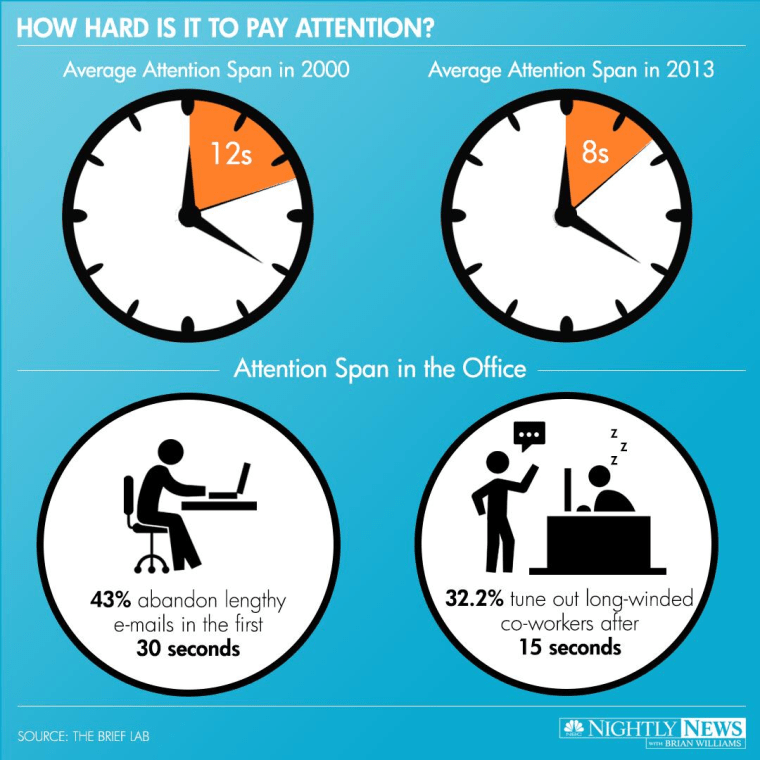
Attentionspan, the ability to focus on a single task or thought without becoming easily distracted, is a crucial cognitive skill that influences various aspects of daily life, including learning, problem-solving, and effective communication. However, the complexity of attaining and maintaining a healthy attentionspan is influenced by numerous factors, both internal and external.
External Factors Affecting Attention Span
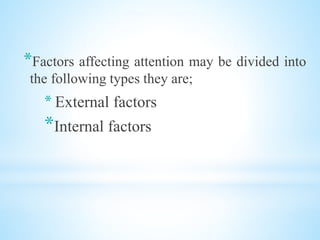
External factors, also known as stimuli, play a significant role in capturing and maintaining attention. These factors can be broadly categorized into two types: objective and subjective.
Objective Factors
- Intensity: The more intense a stimulus is, the more likely it is to capture attention.
- Novelty: Unusual or unexpected stimuli tend to grab attention more easily.
- Size: Larger or more prominent stimuli are more likely to attract attention.
- Movement: Stimuli that move or change position are more likely to capture attention.
Subjective Factors
- Personal interest: Subjects that are of personal interest or relevance are more likely to hold attention.
- Desire: Stimuli that align with one's desires or goals are more likely to capture attention.
- Motives: Underlying motives or motivations can influence attention towards certain stimuli.
- Past experiences: Previous experiences or associations can impact attention towards certain stimuli.

Internal Factors Affecting Attention Span
Internal factors, including cognitive and emotional states, also play a significant role in influencing attention span. These factors can be broadly categorized into cognitive, emotional, and motivational factors.
Cognitive Factors
- Working memory: Capacity to hold and manipulate information in working memory affects attention.
- Attentional control: Ability to focus attention and control distractions impacts attention span.
- Executive functions: Cognitive processes, such as inhibitory control, planning, and decision-making, influence attention.
Emotional Factors
- Stress: High levels of stress can divert attention and affect attention span.
- Mood: Emotional states, such as anxiety, depression, or excitement, can impact attention.
- Emotional regulation: Ability to regulate and manage emotions influences attention.
Motivational Factors

- Intrinsic motivation: Personal interest or enjoyment in activities can sustain attention.
- Extrinsic motivation: External rewards or incentives can impact attention and motivation.
- Self-efficacy: Belief in one's ability to succeed or achieve goals influences attention and motivation.
Developmental Factors Affecting Attention Span
Age-Related Changes
- Infancy: Infants have short attention spans due to limited cognitive and motor skills.
- Childhood: Children develop attention skills, but may struggle with sustained attention.
- Adolescence: Attention skills continue to develop, but may be impacted by peer influences and distractions.
- Adulthood: Attention span may be impacted by work, family, and social responsibilities.
Individual Differences
Conclusion
Factors affecting attention span include a complex interplay of external and internal factors, cognitive and emotional states, and developmental factors. Understanding these factors can help individuals develop strategies to improve and maintain attention span. By recognizing the impact of external and internal factors on attention span, individuals can take steps to optimize attention and optimize performance in various aspects of life.